
EP-AIoT PLATFORM
1. General information
Software name: Core solution IOT management platform integrated with artificial intelligence (AI).
Developed based on a United States Patent:
- •Intelligent plug-and-play point-to-multipoint internet of things (IoT) platform and method of managing the same.
- •US Patent No.: US 10,805,155 B1
- •Date of Patent: Oct. 13, 2020
AIOT management solution is an application that allows software and IoT device developers to integrate and develop their IoT products on a unified and professional platform. The pre-developed library will make it easier for developers to connect IoT devices and manage them in a large model of up to millions of devices.
The software system and technology infrastructure are designed to connect, manage, collect, process, and apply artificial intelligence (AI) technology to analyze data from millions of IoT devices in real time.
The AIOT platform develops under a strict quality management process. The system complies with ISO/IEC 27001 information security standards and OWASP Top 10 web application security practices. Sensitive data is encrypted according to standards and stored internally to ensure TCVN's requirements for cybersecurity.
2. Scope of application
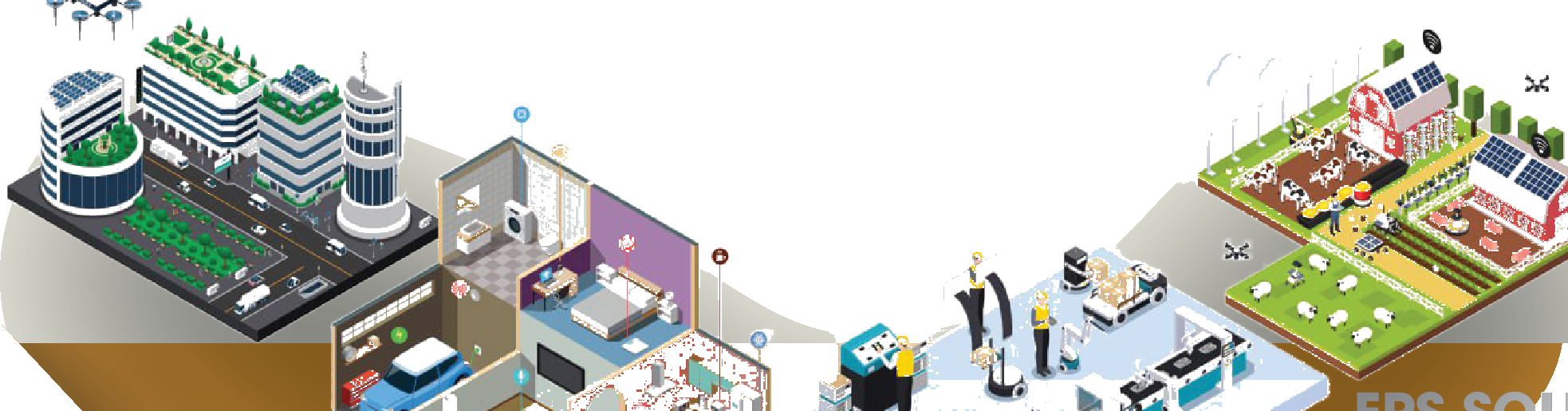
◆The AIoT Platform solution is suitable for deployment in areas that require effective monitoring, control, and process automation, including:
Smart Cities:
Environmental monitoring (air quality, water), traffic management, public lighting, and security systems.
Security:
Manage and monitor security equipment such as cameras, motion sensors, fire alarm systems.
Industry 4.0:
Monitoring the production line, monitoring the condition of machines, managing energy and assets in the factory.
Smart Agriculture:
Collect environmental data (temperature, humidity, light), control irrigation systems, and monitor animal health remotely.
Healthcare:
Monitor patient health remotely through wearable devices, manage medical equipment.
3. Business feature/function list
◆The platform provides a comprehensive set of functionalities for managing and mining data from IoT devices:
Device Management
- •Remotely register, configure, and monitor the status of millions of IoT devices.
- •View device status: online/offline, firmware code, IP local/WAN, location via IP.
- •Group devices by location, type or function for effective management.
- •Support a variety of terminals such as trouble warning transmitters, cameras, navigation devices, etc. especially fire alarm communication equipment and IoT equipment in the field of fire protection.
Diverse Hardware Support
Device Configuration
- ◦Connection and configuration process: Registration, device authentication, firmware loading, Plug and Play support.
- ◦Configure more sensors, parameters, and I/Os.
- ◦Supported I/O: Input, Output, Analog, PWM, Virtual Pin.
- ◦Users only need to configure on the platform, no need to program the firmware (Plug and Play).
- ◦With Virtual Pin and MQTT: requires the user to programmatically send data.
Plug and Play
- •Automatic recognition: When you plug in a device, the system automatically recognizes the device type and communication protocol. Supports multiple devices & protocols: Zigbee, Bluetooth, Modbus, Wifi, 4G/Ethernet, LoRaWAN.
- •Auto-Configuration: Automatically synchronizes the parameters required for the device to operate immediately (automatically scans from the sample device for quick configuration).
- •Allows users to drag & drop widgets to manage the device once it has been successfully connected.
- •Allows users to dynamically configure processing processes.
- •Turn your phone into a gateway via Bluetooth.
Data processing and analysis
- •Intuitive dashboard: Provides a user interface that displays all alerts, parameters, data aggregation and statistics in real time.
- •Real-time processing: Collect, store, and analyze data as soon as it is received, helping to make timely decisions.
- •In-depth data analytics: Supports features such as event processing, prediction, and modeling.
Data analysis using AI/ML
- ◦Using artificial intelligence to be able to detect anomalies based on inputs from sensors, equipment logs or field images.
- ◦Analyze signal classification based on the history and status of the device.
Automation and Intelligent Response
- ◦Automation Configuration: Allows users to set up action scenarios based on specific alerts or events.
- ◦Remote control: Users can control the terminal through the platform interface.
Security and decentralization
- •Device authentication: Ensure only licensed devices can connect to the platform.
- •Data encryption: Encrypt data during transmission and storage to ensure integrity and security.
- •Access Control: Granular permissions for users and devices, ensuring that only the authorized person can access certain data and functions.
Integrations and Extensions
- •Open APIs: Provides APIs (RESTful, SOAP) and SDKs for easy integration with external systems or third-party applications.
- •Diverse list of supported protocols: Supports popular protocols such as HTTP(S), MQTT, CoAP, WebSocket, TCP/IP, helping to connect to many different types of devices.
Operation and management
- •User management: Add, delete, edit, and delegate permissions to users on the system.
- •History management: Store the history of events and system operations, support tracing and inspection.
Ready to Deploy AIoT?
Contact us for detailed consulting and product demos.